FIRE FIGHTING SYSTEM

FIRE FIGHTING SYSTEM

Mechanical fire fighting systems are a crucial part of a building’s safety infrastructure, encompassing both active fire protection (systems that use mechanical or electrical parts to suppress a fire) and mechanical fire protection (systems that move air to control smoke and fumes). They are designed to detect, control, or extinguish fires, protecting lives and property.

We stand for quality, safety & credibility, so you could trust us fully about Engineering working process.

Core Functions

Mechanical fire fighting systems work together to ensure comprehensive protection. 
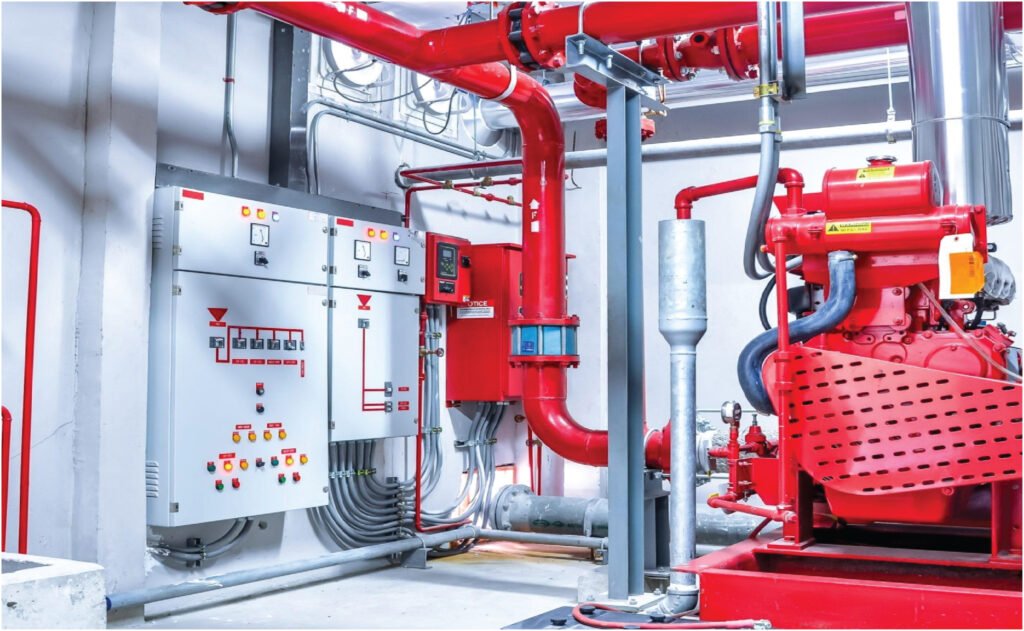
  • Fire Pumps and Water Tanks: These ensure a reliable, high-pressure water supply for hydrant and sprinkler systems, often powered by electric, diesel, or both types of pumps.
  • Fire Sprinkler Systems: These systems activate automatically when a specific temperature is reached, discharging water over the fire area. Types include wet pipe, dry pipe, pre-action, and deluge systems, each suited to different building types and hazards.
  • Fire Hydrant Systems: A network of pipes, hoses, and valves provides a high-pressure water supply for manual firefighting efforts, commonly installed in and around large buildings and industrial plants.
  • Fire Suppression Systems (Gaseous, Foam, Wet/Dry Chemical): These systems use agents other than water (e.g., CO₂, FM-200, Novec 1230, foam, or dry chemicals) to suppress fires. They are often used in areas where water could cause significant damage, such as server rooms, museums, or areas with flammable liquids.

Our benefits

They are systems that use mechanical or electrical parts to detect, control, or extinguish fires. This includes equipment like fire pumps, sprinkler systems, smoke control systems, and gaseous suppression systems, designed to operate automatically or manually.

Yes, most commercial, industrial, and multi-family residential buildings are required by local and national building codes and safety regulations (such as the International Building Code (IBC) and NFPA standards) to have appropriate fire safety systems installed.

Active systems (like sprinklers and fire alarms) require some action to work during a fire. Passive systems (like fire-resistant doors and walls) are built-in structural components designed to contain a fire within a specific area.