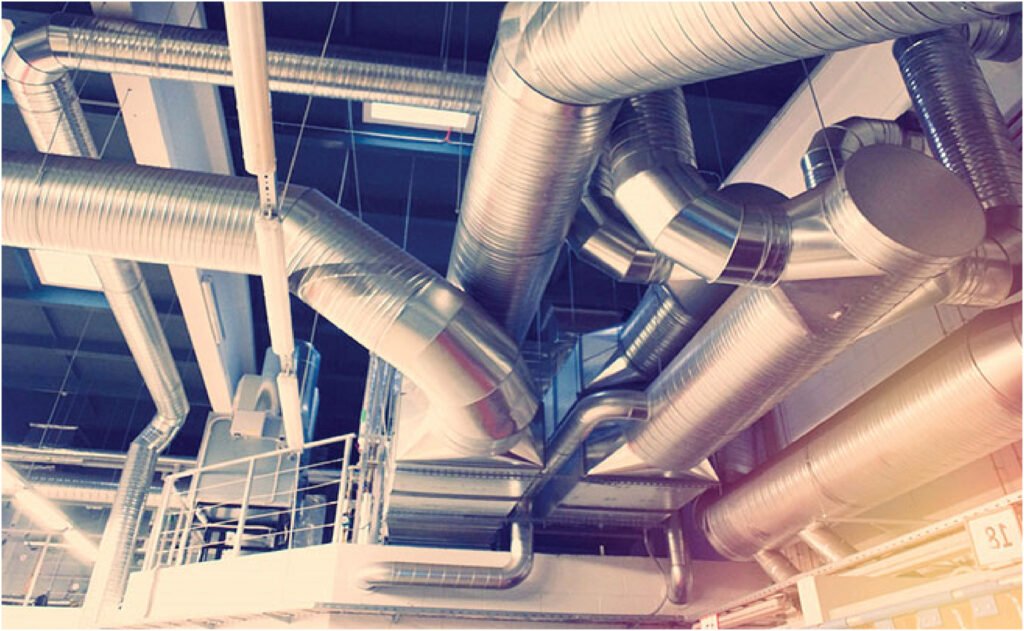
HVAC SYSTEM
A mechanical HVAC system (Heating, Ventilation, and Air Conditioning) is the technology and equipment responsible for controlling the indoor environment of a building by regulating temperature, humidity, air quality, and airflow. The design and operation of these systems fall under the field of mechanical engineering.
We stand for quality, safety & credibility, so you could trust us fully about Engineering working process.
Core Functions
- Heating: Generates warmth during cold periods using equipment like furnaces, boilers, or heat pumps.
- Ventilation: Exchanges or circulates air within a space to remove contaminants (odors, smoke, carbon dioxide) and replenish oxygen.
- Air Conditioning (Cooling): Removes heat and humidity from indoor air during warm periods using a refrigeration cycle involving components like compressors, condensers, expansion devices, and evaporators.
Our benefits
- Occupant Comfort and Health
- Enhanced Indoor Air Quality (IAQ)
- Humidity Control
HVAC stands for Heating, Ventilation, and Air Conditioning. It refers to the systems and equipment that regulate the temperature, humidity, and air quality inside a building to maintain a comfortable and healthy indoor environment.
SEER stands for Seasonal Energy Efficiency Ratio. It is a measure of the cooling efficiency of an air conditioning unit. A higher SEER rating indicates greater efficiency, which can lead to lower energy bills and energy savings over time.
HVAC systems are sized based on a professional “load calculation” that considers your home’s square footage, insulation, number of windows, and local climate. An incorrectly sized system (either too large or too small) can lead to inefficiency, discomfort, and increased wear and tear.